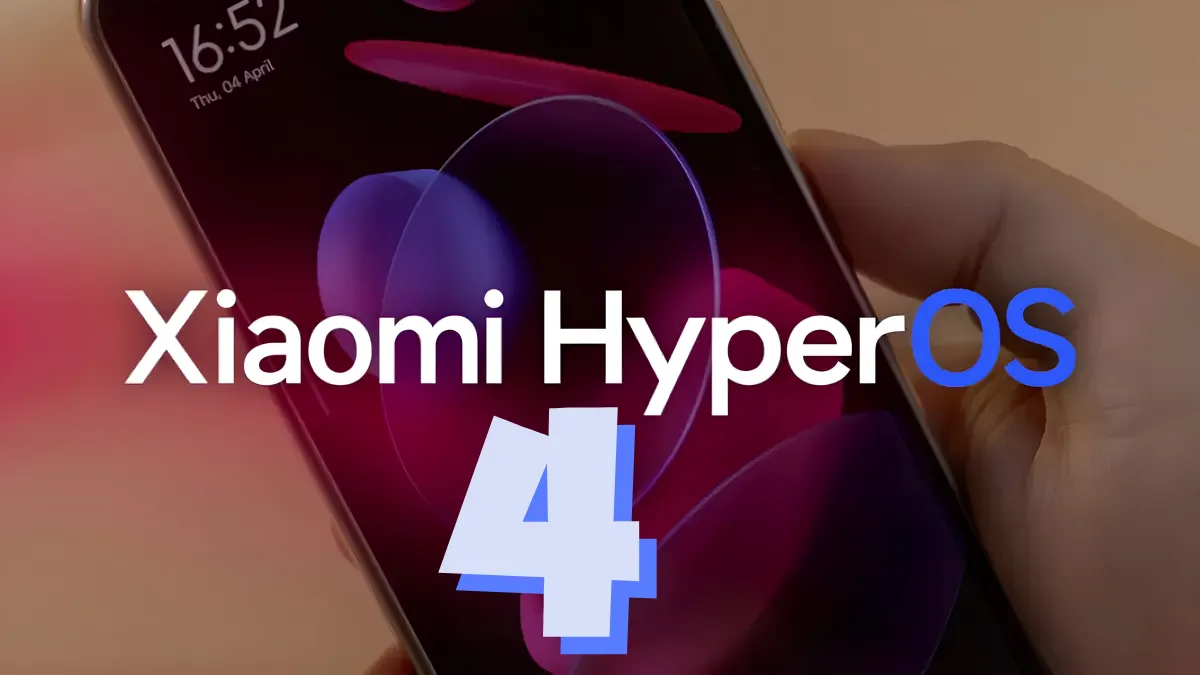
Xiaomi HyperOS 4 Beta Device List and Rollout Dates
Xiaomi opened HyperOS 4 beta recruitment this morning, and the first builds land tomorrow afternoon — no launch event, no keynote. Lu Weibing said the company chose to skip the launch presentation and refine the release through user feedback instead, which tells you how Xiaomi is treating this cycle: ship it, watch the forums, fix it before stable.
Twenty-six devices are named across three waves running to September 17. If yours is on the list, the practical question is not whether you get Android 17 — it is whether you get the version of HyperOS 4 that appears in Xiaomi’s marketing. For at least three named devices, the answer is no.
Table of Contents
Which Devices Get the HyperOS 4 Beta
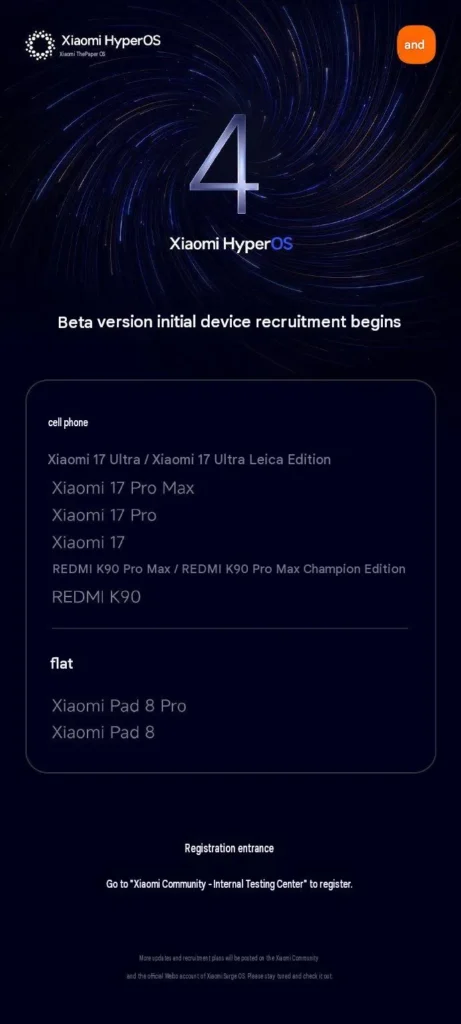
From the afternoon of August 14
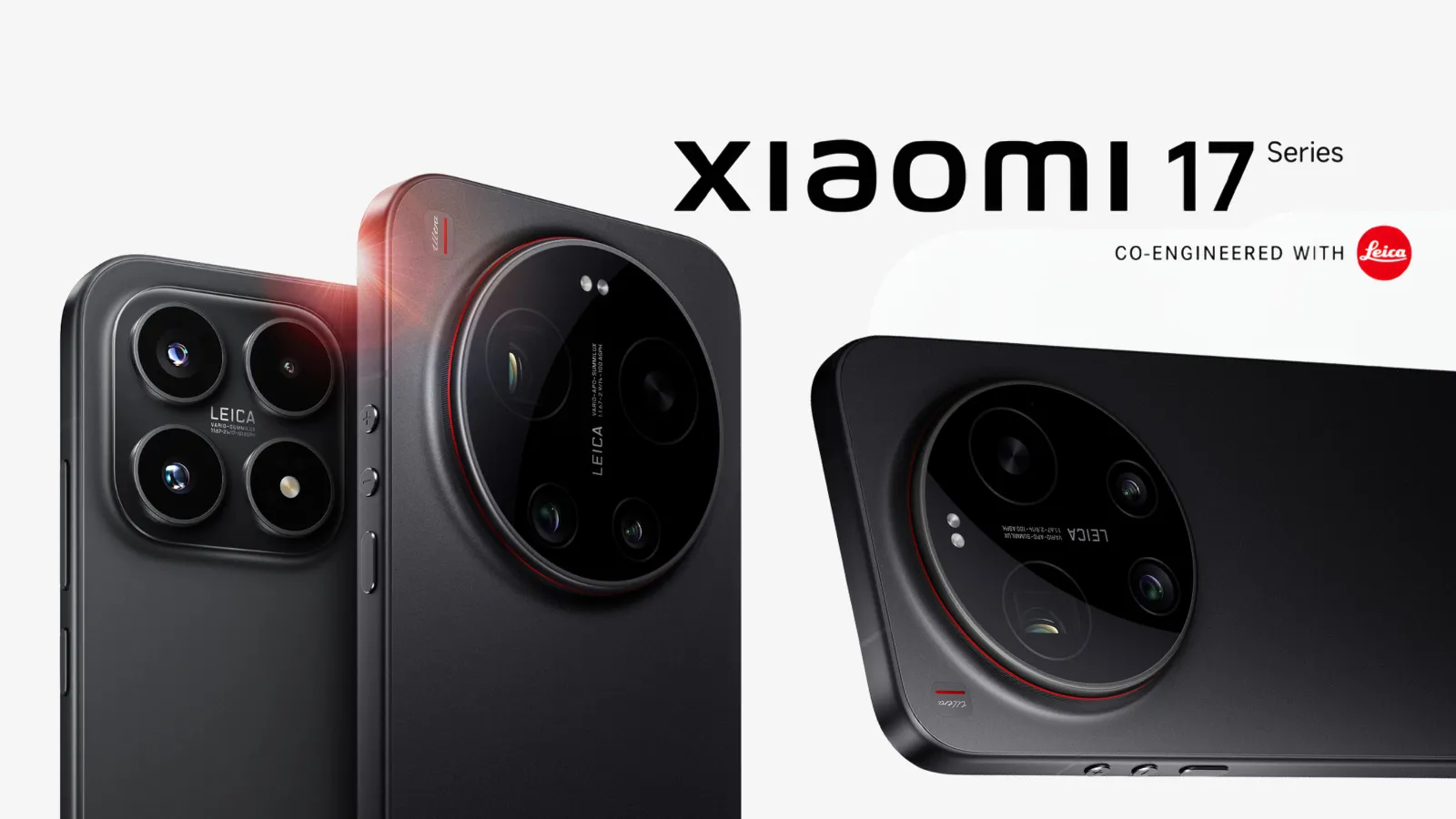
Phones: Xiaomi 17 Ultra (including the Leica Edition), Xiaomi 17 Pro Max, Xiaomi 17 Pro, Xiaomi 17, Redmi K90 Pro Max (including the Champion Edition), Redmi K90
Tablets: Xiaomi Pad 8 Pro, Xiaomi Pad 8
From August 27
Phones: Xiaomi 17 Max, Xiaomi 17T Pro, Xiaomi 17T, Xiaomi 15 Ultra (including the Dual Satellite Edition), Xiaomi 15S Pro, Xiaomi 15 Pro, Xiaomi 15, Redmi K90 Max, Redmi K90 Supreme Edition
Tablets: Redmi K Pad 2
From September 17
Phones: Redmi K100 Pro Max, Redmi K100 Pro, Redmi K80 Pro, Redmi K80 Supreme Edition, Redmi K80, Xiaomi MIX Flip 2
Tablets: Xiaomi Pad 7 Ultra, Xiaomi Pad 7S Pro 12.5
Two counting notes, because outlets are reporting different totals. Xiaomi lists 29 line items but only 26 distinct devices — the Leica, Champion and Dual Satellite entries are variants of models already named. And the Chinese listing uses 至尊版 for the Redmi K90 and K80, which English outlets have rendered as “Ultra,” “Supreme Edition,” and “Ultimate Edition.” Same phone, three translations.
Xiaomi’s schedule puts the Redmi K90 and K90 Pro Max at the front of tomorrow’s push. Separately, Weibo posts from Xiaomi executives aggregated by Sina indicate the Redmi K100 Pro series is lined up to receive the stable HyperOS 4 build first — a different queue from the beta order above.
Not Every Eligible Device Gets Soft-Light Glass
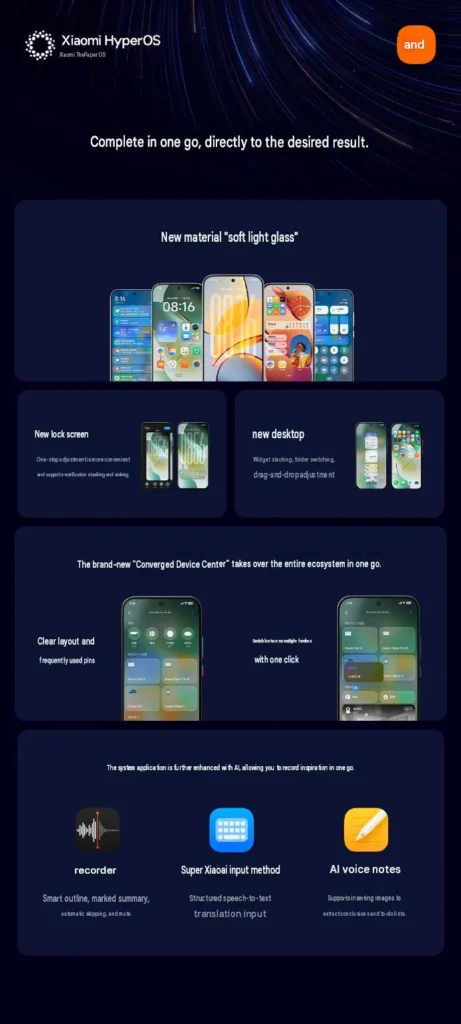
This is the part the device list hides. HyperOS 4’s visual signature is a new material Xiaomi calls soft-light glass, with matching interactive lighting. Xiaomi states the effect is hardware-limited and specifies the bar: phones and tablets on Snapdragon 8 Elite or newer, phones on Dimensity 9500 or newer, and phones on the Xring O1 3nm chip or newer.
Read that against the 26 devices, and three fall clearly short:
- Xiaomi Pad 8 — Snapdragon 8s Gen 4. It is in tomorrow’s first wave and does not meet the Snapdragon 8 Elite line.
- Redmi K80 — Snapdragon 8 Gen 3. One generation below.
- Redmi K80 Supreme Edition — Dimensity 9400+, against a stated floor of Dimensity 9500.
Then there is a wording gap Xiaomi has not addressed. The Snapdragon clause covers phones and tablets. The Dimensity and Xring clauses say phones only. Three tablets on the beta list run non-Snapdragon silicon: the Redmi K Pad 2 on Dimensity 9500, and the Xiaomi Pad 7 Ultra and Pad 7S Pro 12.5, both on Xring O1. All three sit above the performance line their chip family implies, but outside the sentence that grants tablets access. Xiaomi has published no per-device compatibility list resolving this, and it is the first thing to check when those builds land in September.
Credit where due: Xiaomi published the cutoff on day one rather than shipping a quietly downgraded build. But “your phone gets HyperOS 4” and “your phone gets the HyperOS 4 in the ads” are not the same promise for the September wave.
How to Join the HyperOS 4 Beta
Recruitment opened at 11:00 today in the Xiaomi Community app, and each model recruits in two batches — the second opens once the first fills, with pushes expected within about ten days of the first batch.
Xiaomi’s own FAQ covers the common failures: your device must already be on the latest HyperOS 3 build, the account you register with must match the account signed in on the phone, and if approval arrives without a push, you can force a check under Settings → My Device → tap the version number. Extra battery drain and warmth after upgrading is background compilation and normally settles within one to three days.
What HyperOS 4 Actually Changes
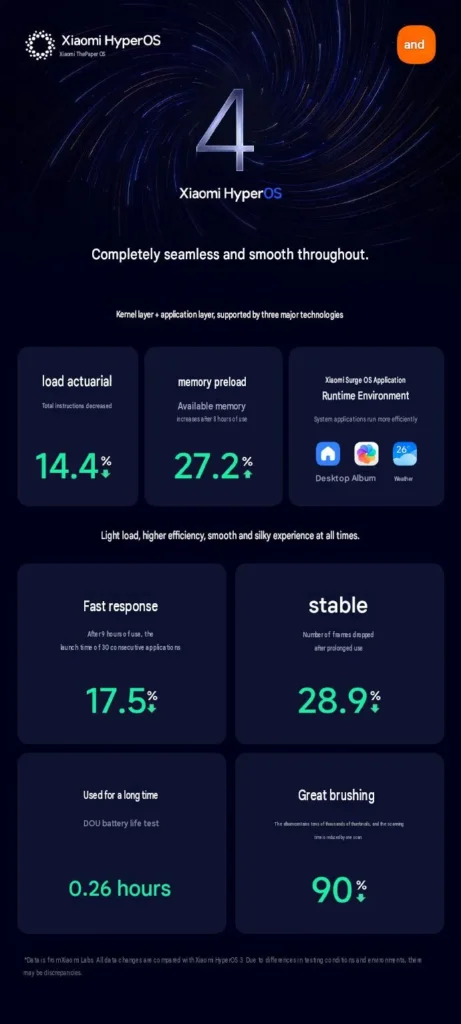
Underneath, Xiaomi has added two technologies to its HyperCore architecture — load calculation and memory preloading — plus a rebuilt application runtime environment. The vendor’s own numbers: opening 30 apps consecutively after extended use got 17.5 percent faster, and frame drops during long sessions fell 28.9 percent. Both are Xiaomi lab figures with no independent testing behind them yet.
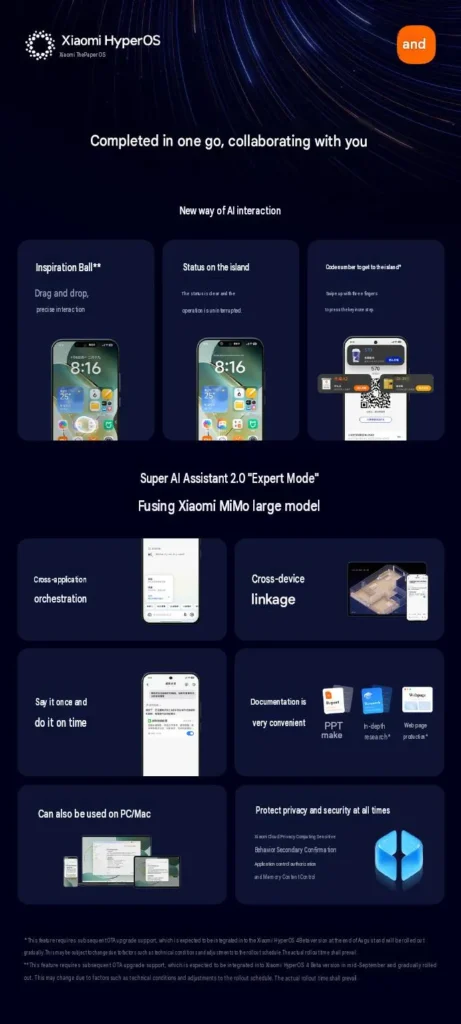
The AI layer is Super XiaoAI 2.0, built on Xiaomi’s MiMo large language model, with new task-planning and content-generation abilities and an expert mode. Xiaomi says the assistant now reaches Macs and third-party PCs. An assistant spanning phone, tablet and laptop sees considerably more of what you do, and Xiaomi has not published what stays on-device.
Elsewhere: a redesigned lock screen with resizable large clocks, stacked notifications, stackable home-screen widgets and resizable folders, a reworked Integrated Device Centre with one-tap switching between homes, an AI voice notes app, and a floating bottom tab in the Phone app. Xiaomi also used the interface showcase to show an unannounced wide foldable — no name, no specs, no date.
When Does HyperOS 4 Reach India and the Global
It doesn’t, yet. Every date above is a China-market schedule with China-market model names. Xiaomi has published no global or India beta timing, and this is a beta enrolment list rather than the stable eligibility list — a device missing from it is not confirmed excluded from HyperOS 4, only from this beta.
Updates
2026-08-13 — Xiaomi opened first-wave beta recruitment in the Xiaomi Community app; first builds scheduled for the afternoon of August 14.